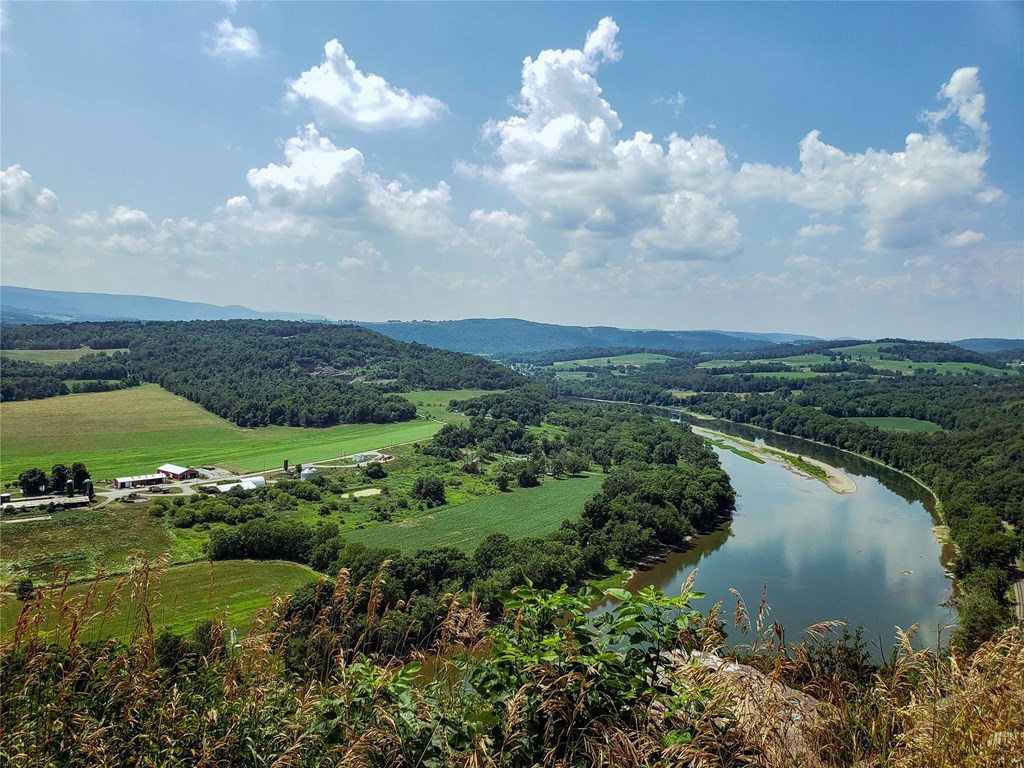
Susquehanna River
Posted on in Todd Talks by Todd Johnson
Having grown up with the Susquehanna River as a backdrop to everyday life, I never really appreciated it for what it is. I also have serious doubts that many people who live along the 444 miles of this river’s banks give it much thought. I spent a considerable amount of time as a youth in one of the tributaries of this great river—catching fish, swimming, chasing crayfish, and skipping rocks. As I have grown older and much more interested in history, I have found this area to be quite fascinating. And you can’t tell the history of Pennsylvania without the Susquehanna.
The mighty Susquehanna’s headwaters are found in Cooperstown, NY, which is also home to the Major League Baseball Hall of Fame. From there, she winds down into Pennsylvania, only to cut right back into New York. The river roughly tracks westward along the border of these two states until it leaves New York for good when it reaches the sister towns of Waverly, New York, and Sayre, Pennsylvania. That is where it begins its trek south to empty into the Chesapeake Bay. Along the way, nearly half of Pennsylvania’s land area drains into the river. The Susquehanna is the longest river on the East Coast and the 16th-longest river in the United States. It is also the longest river without any commercial boat traffic, largely because it is far too shallow to accommodate anything larger than recreational craft. Its average depth is only 5 to 10 feet.
It hasn’t always been this way. From our country’s founding up until the advent of rail, the river was used to ship goods and timber, though not on the scale required today.
Many industrial centers were built on her banks, using the flow to drive mills and cool machinery. But long before those were built, the river was very important to the local Lenape tribes. In fact, the name “Susquehanna” is believed to be derived from their word meaning “muddy river” or “oyster river.” Oyster beds were once common in and around the bay near the mouth of the river, and piles of discarded oyster shells have been found in abandoned tribal areas. I once heard a joke that the real meaning of the word Susquehanna was “mile wide, foot deep.” In fact, there is a section of the river that is nearly a mile wide.
One of my favorite features of the river is near Harrisburg, where huge rocks stick above the water for miles—so many that it looks as if you could cross some of the widest sections by hopping from rock to rock. There are also nearly 1,000 islands in the Susquehanna. Some are tiny, but many are large. Some are privately owned and even farmed. Others are state game lands or campgrounds. One island is world-famous—perhaps you’ve heard of it? Three Mile Island, the site of the partial meltdown of a reactor core in 1979.
Today, the Susquehanna River is a great place to fish. In fact, it is home to some of the best smallmouth bass fishing in the country. It is also a popular river for kayaking and other recreational boating. There is also the longest stone masonry arch bridge in the world spanning the river. Built by the Pennsylvania Railroad in 1902, the Rockville Bridge is 3,820 feet long with forty-eight 70-foot spans—a sight to behold.
If you enjoy nature, consider a visit to the beautiful, wooded banks of the Pennsylvania section of the Susquehanna. You might even catch a glimpse of some of the growing number of bald eagles that call the riverbanks home.